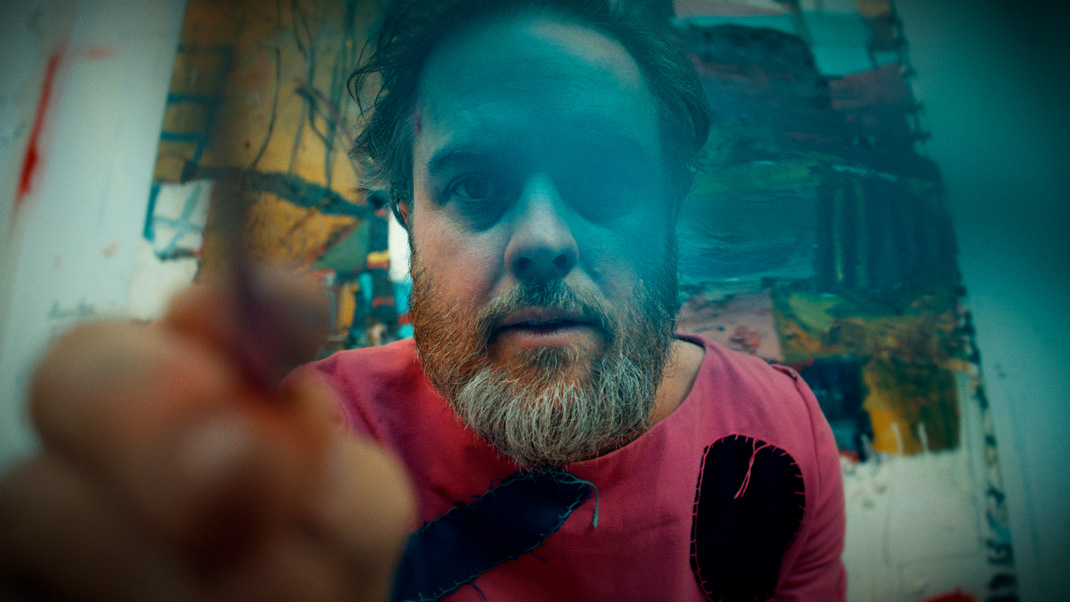
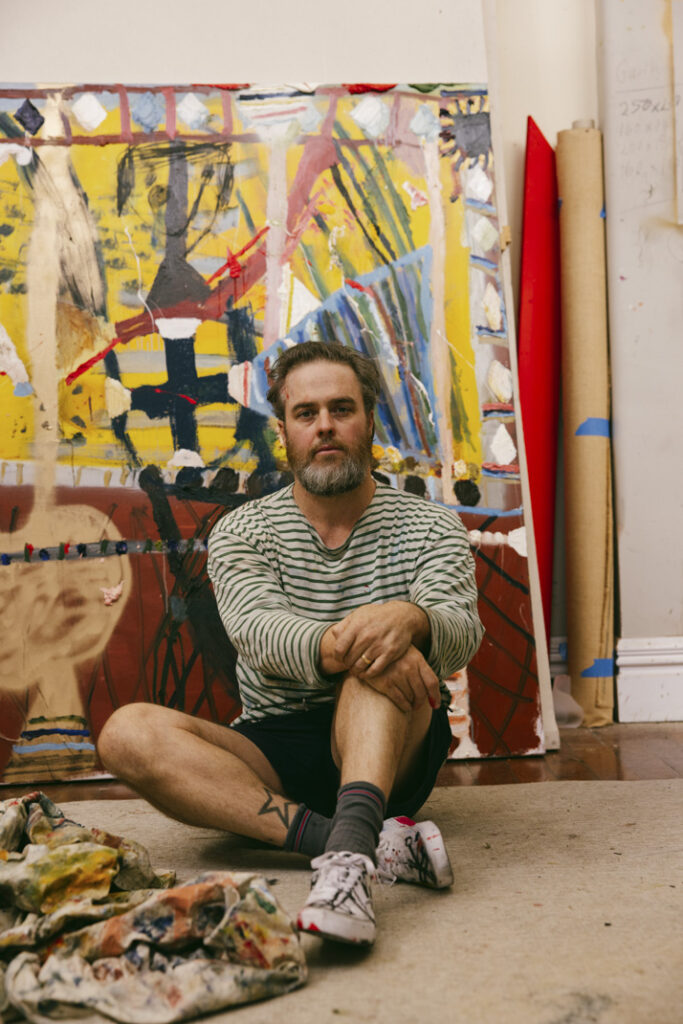
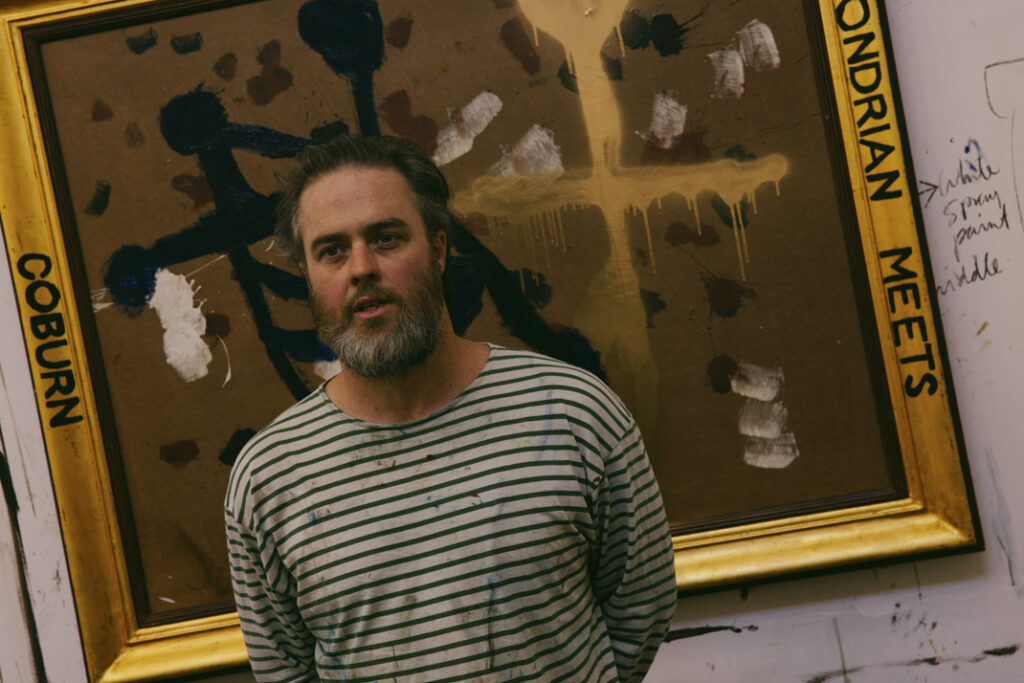
James Drinkwater let us look into his studio and his mind in Newcastle.
It’s hard to define why a piece of art “speaks” to you. Obviously, the colours, shape, medium, etc. all help form your relationship to a piece, but beyond that, for something to really impact you in a meaningful way is nearly indescribable (don’t worry, I’m not going to try!).
James Drinkwater’s work achieves that hard-to-define feeling for a lot of people, with the Newcastle-born painter and sculptor presenting more than 30 shows across the world, winning a handful of awards, including the much-coveted Brett Whiteley Travelling Scholarship, and his work hanging in some of the most prestigious galleries and private collections around the country.
You’d think that would keep him pretty busy… But Drinky also plays music, fronting pub rock outfit The Pitts, who most recently performed at the re-opening of Newcastle Regional Art Gallery, and having previously sung in legendary Newy indie group Dirty Pink Jeans – IYKYK.
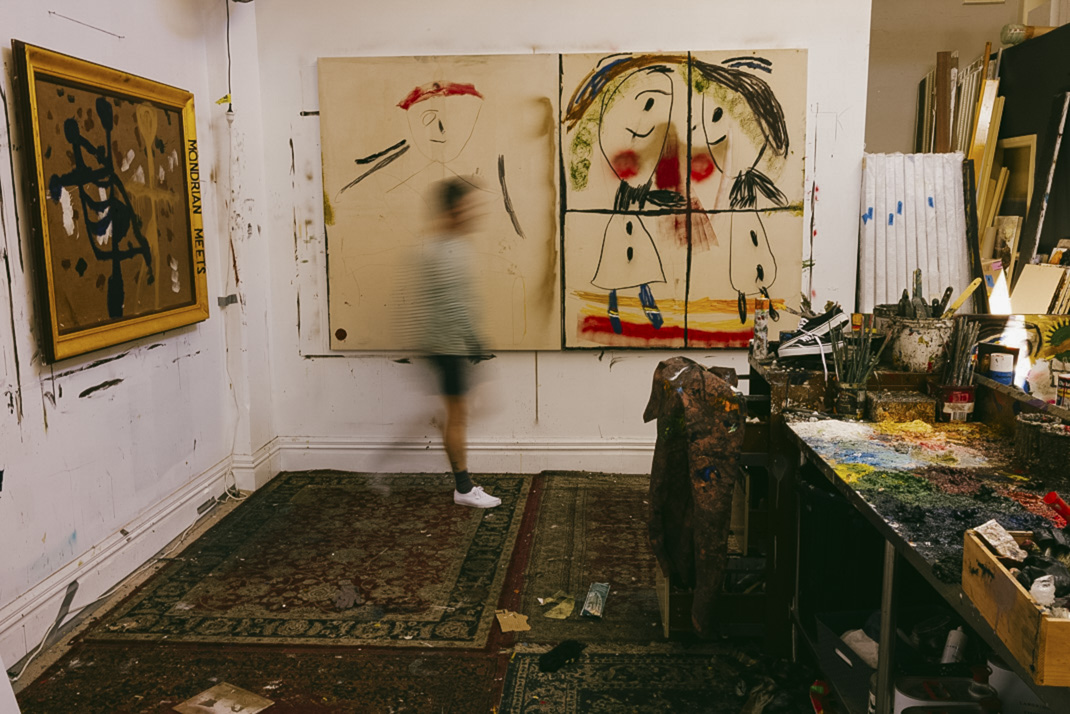
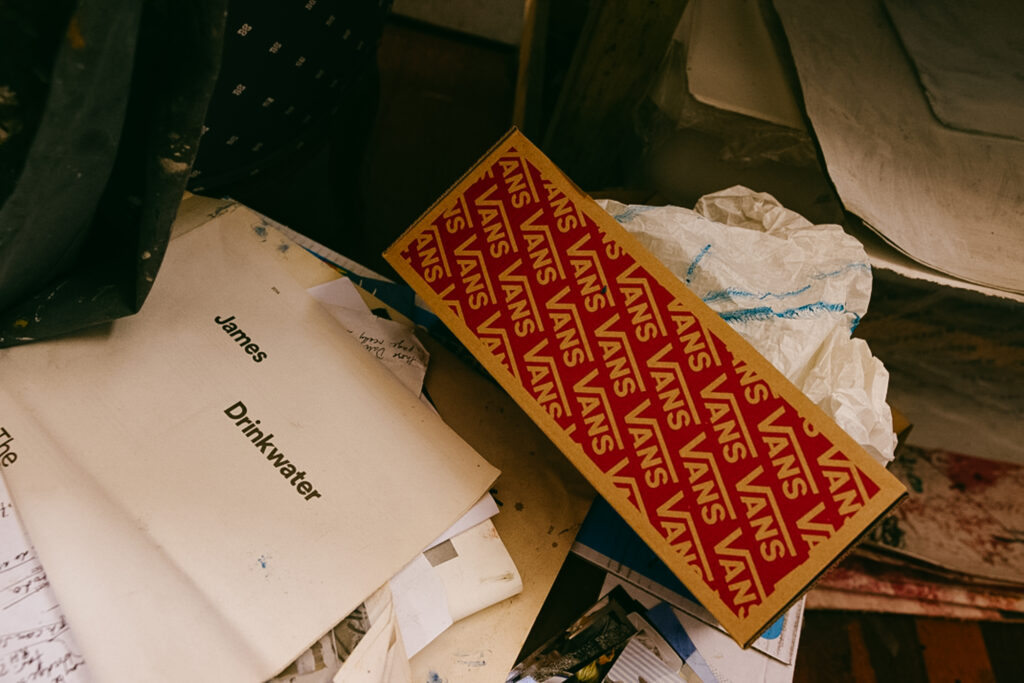
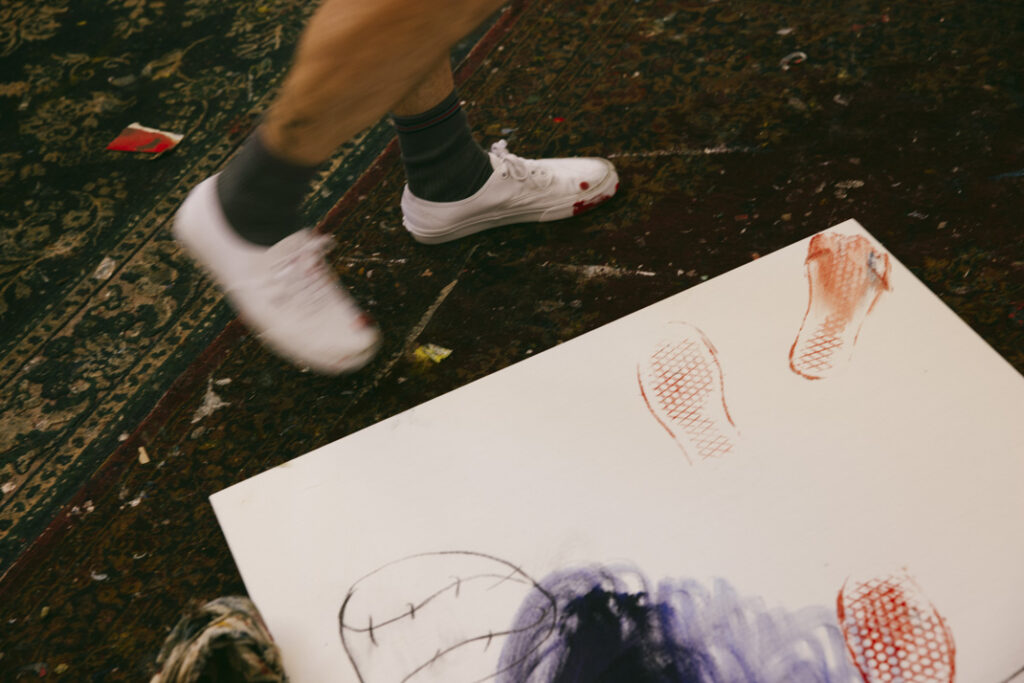
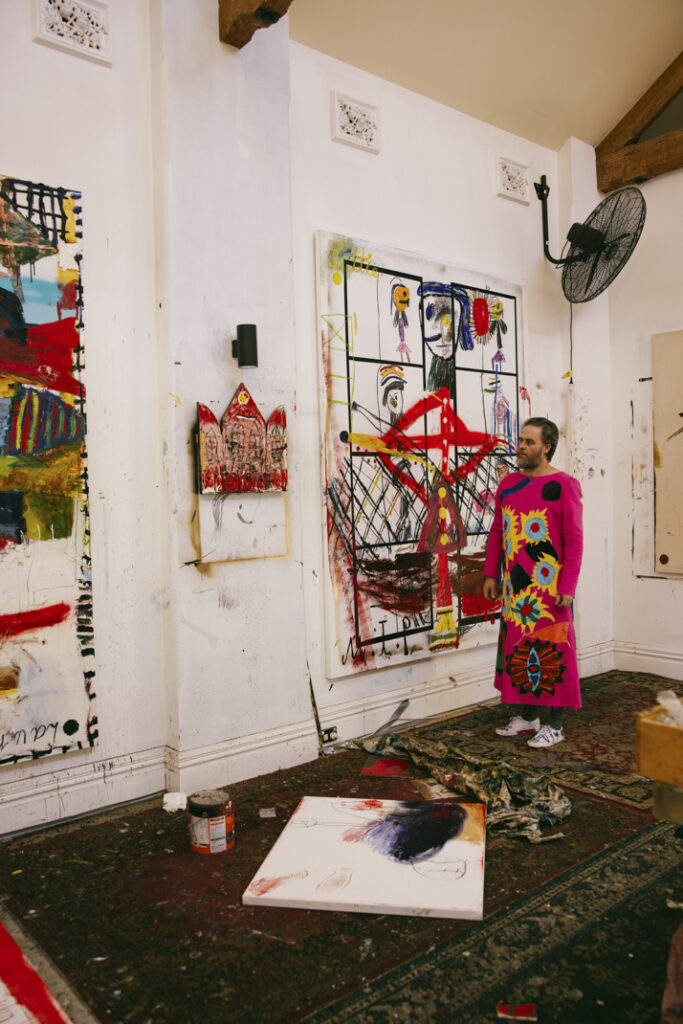
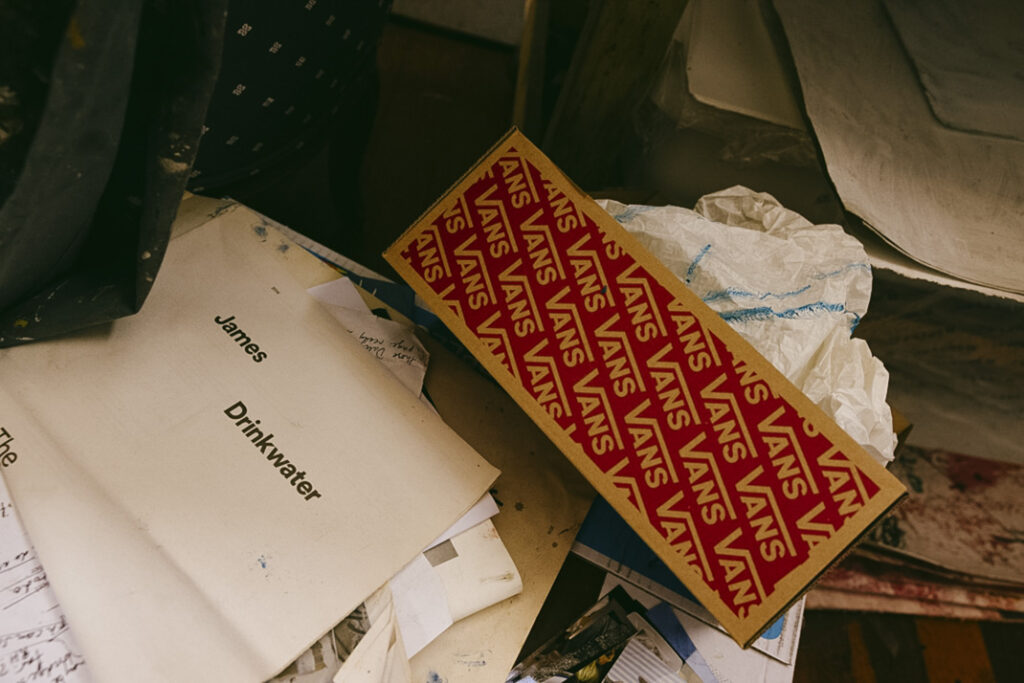
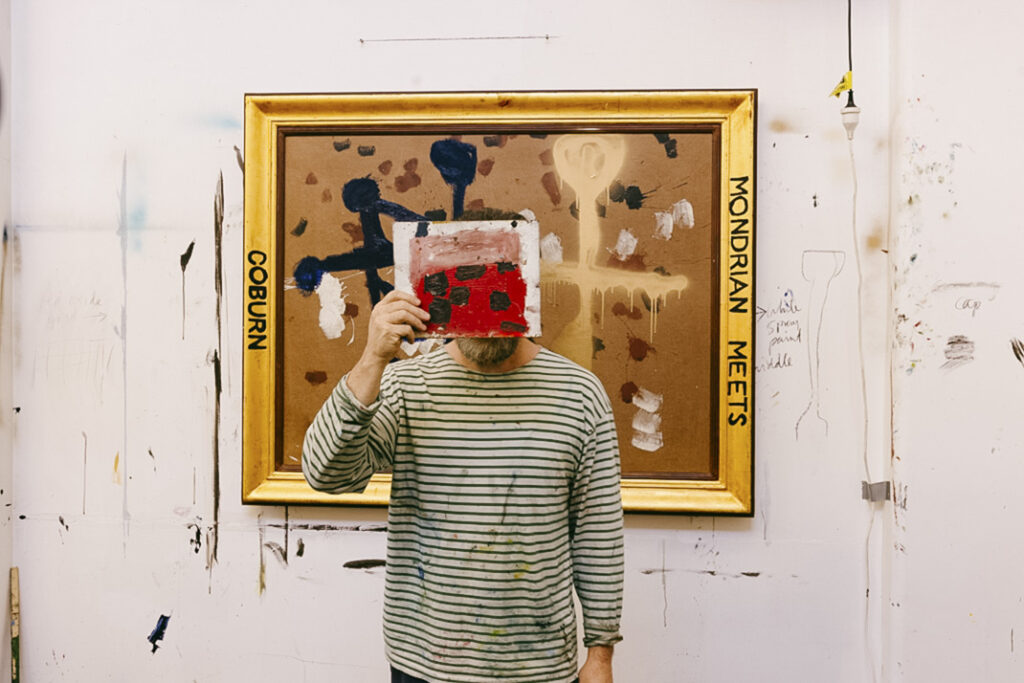
We sat down with him in his studio to talk about how he interprets the world through art, upcoming projects, and what the hell “authentic” means. Check it out below, presented by the Vans Authentic:
What does “being authentic” mean to you?
What does being authentic mean to me? You know, when you hear yourself on a tape recorder for the first time and you think, that’s not me. You know that shocking moment of, I don’t sound like that. It’s like, yes you do. And I remember my very short career in surfing, for about three minutes, catching a wave at Broken Head or something like that, and a friend’s dad was filming on a camcorder in the ’90s. I thought that was the wave of my life, and then we watched it back in the apartment in Byron, we’re all gathering around, I’m like here comes my thing — and it was shocking. A shocking bit of imagery. It was so bad.
And the point I’m making there is authenticity is like a thumbprint. It’s like your laugh, or when you hear yourself on that tape recorder. When you’re painting and when you’re making something, that sort of ugliness, that version of yourself that’s quite shocking and real and visceral — that’s authenticity to me.
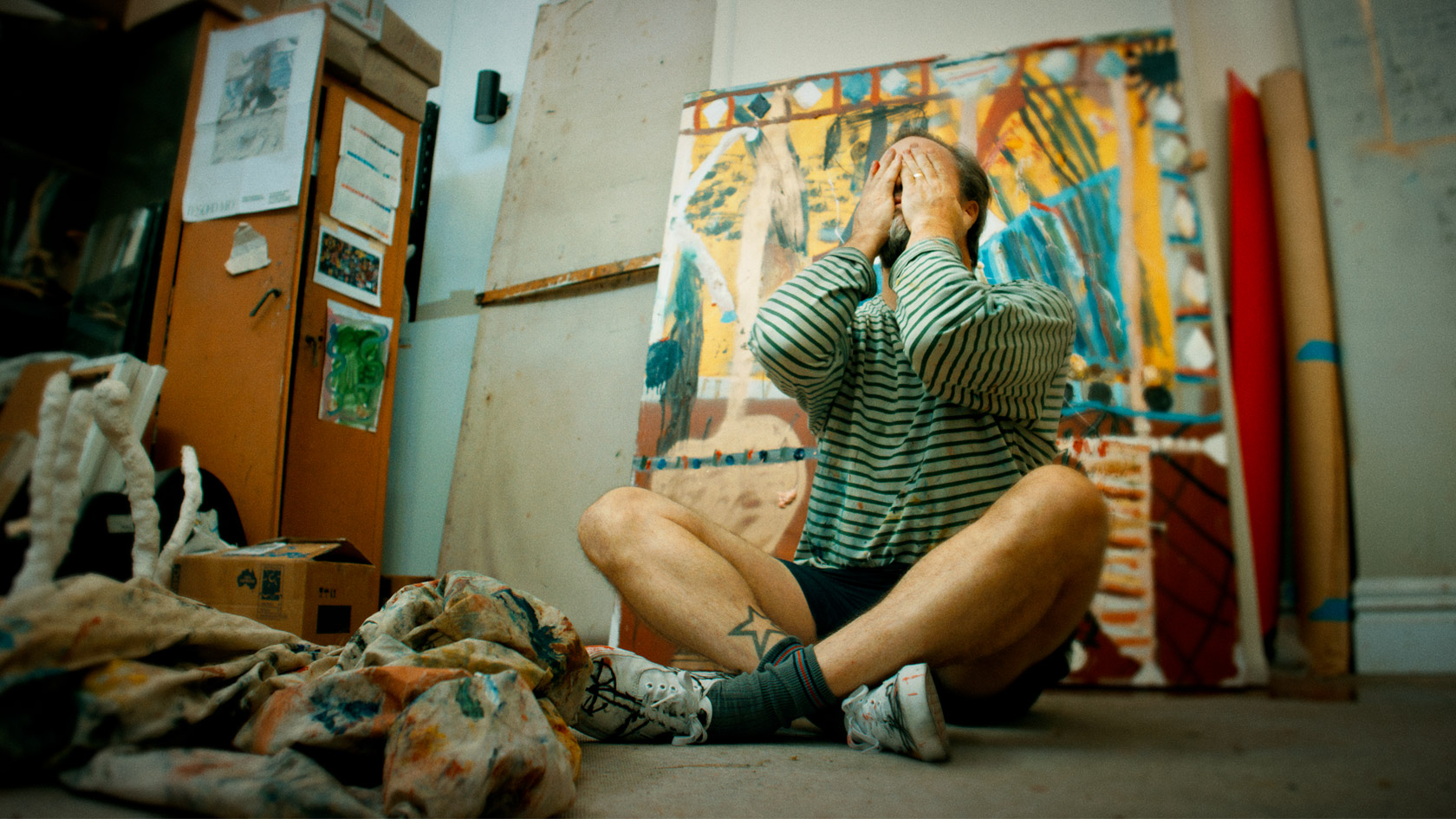
Do you have a different approach to music and painting?
It’s all one. It’s just picking up a different material, a different tool, but to transmit the same expression. I would say sometimes a specific tool is more useful or meaningful to transmit that idea. So sometimes it’s painting, drawing, music, costumes, whatever. But it’s specific to that. Sometimes I have an idea and I think, oh that’ll be transmitted best through this medium or material. But it is one. It’s just one whole thing.
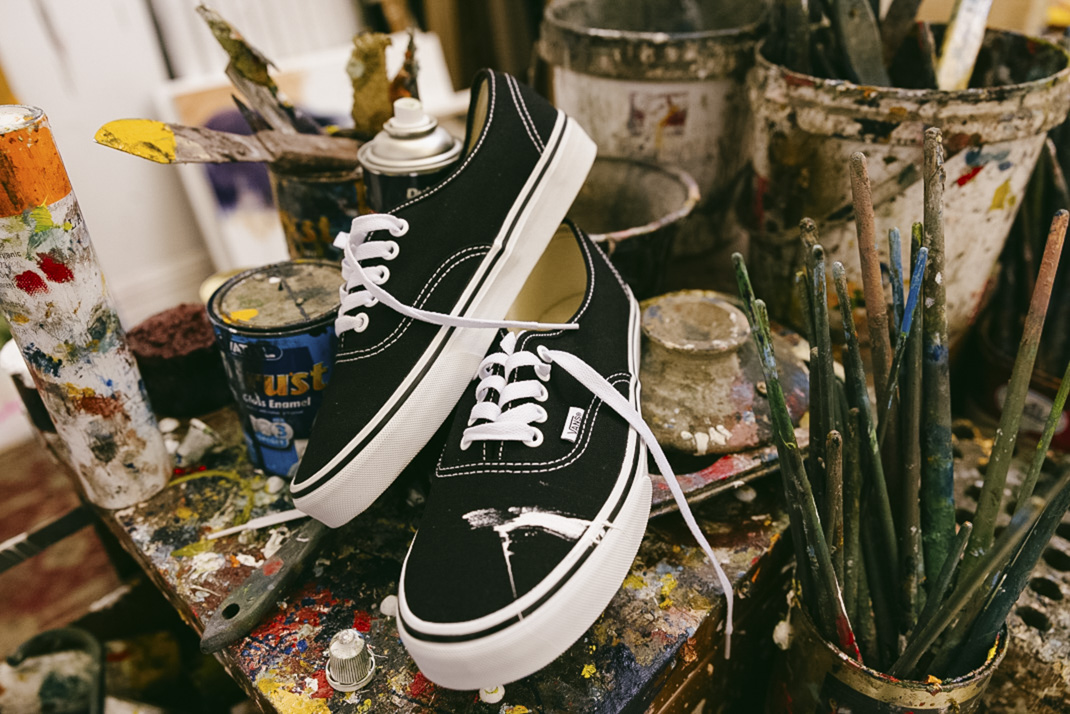
Nostalgia seems to be a recurring theme with The Pitts. Why do you personally pine for the good old days?
I think for a while I used documentation, photographs, and actual visual references to make work from. And I quickly learned that memory was a far more useful way of me recalling the actuality of an event. Memory is more interesting — or nostalgia, whatever you want to call it — far more interesting to me because of its incredible inaccuracy, and the way it becomes malleable like clay. We manoeuvre it, gloss it, polish it, exaggerate it, make it worse or better than it was. And to work from that — the memory, the teasing out and manipulation and stretching of memory — to work from that rather than a photograph is far more interesting to me.
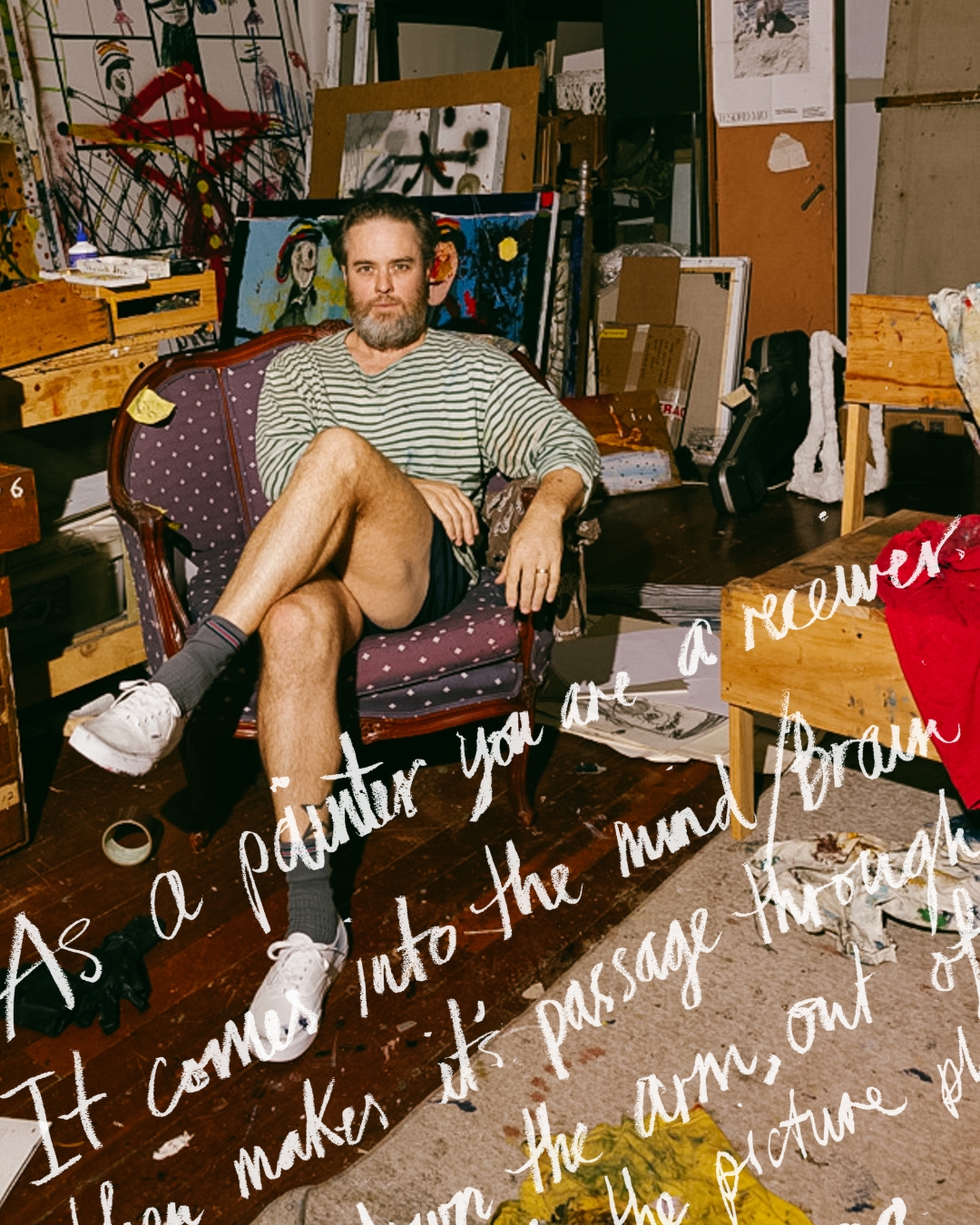
Where do you find inspiration for your work and why do you think it manifests in an abstract way on the canvas?
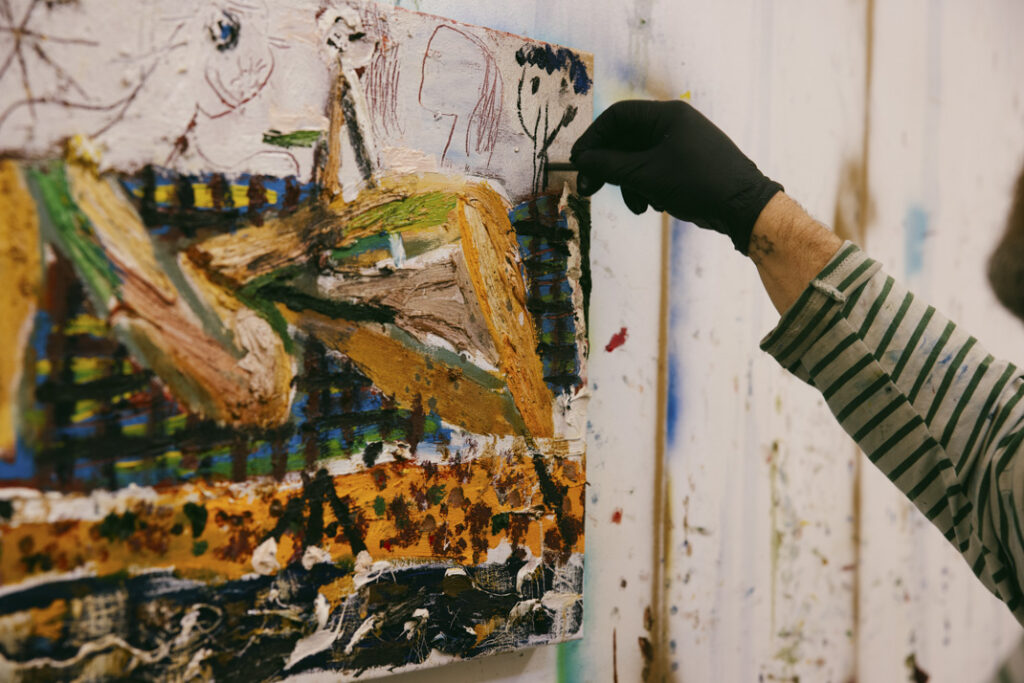
The word inspiration, it’s the right word, but it always irks me. It’s input. As a painter you’re a receiver. You kind of have to have this availability and be like a satellite to receive and absorb. And then you take your world and it comes through the brain via the heart and out the arm and onto the canvas. And then it can only be real and authentic when you’ve made it that way.
My work is about the theatre of the domestic. So the domestic world is to me like cinema. It’s so dramatic and cinematic and exquisite. A table — what happens around a table, the intimacy and the theatre that plays out in all these rooms of a house, where it’s located by the sea, the theatre of family life in and around those arenas — to me it’s so intoxicating and dizzying. That’s where the work comes from. And for a long time I wondered about genres and things like that, and I’m an intimist. It’s about intimacy. It’s about the theatre of the domestic world that I inhabit.
How did things change for you when you won the Brett Whiteley Award?
It was just like, speaking of nostalgia, it was like trying to, you know when you’re jumping fences as a teenager through backyards trying to get somewhere, and you get to that really high fence and you just can’t, and your friend comes underneath you and just gives you that little bit of elevation. It was kind of that moment, that lift. It was kind of down to the wire, and for some reason that was really important to me.
Brett was such a hero growing up, and Wendy, his wife, is now a dear friend, and it was this world I wanted to occupy. So it meant so much. And going to Paris for that period — as Australian painters we have this umbilical cord that comes all the way back home, but when you push your tentacles out and go to places like Paris and New York, that’s big for us. It’s bigger for us because we’re so far. And I went there with a two-year-old, which was incredible too, because I saw a city through a two-year-old’s lens. So that innocence that came through the paintings I made there was so primary to that experience.
What’s on the horizon for you/your creative pursuits?
I try to keep the horizons quite short, and in that sense you’re kind of just in your sandpit in that moment. I try to be inside the process. I’m trying not even to think that I’m making paintings. I’m trying to just move through a process that I trust, following a series of impulses. And then I suppose when deadlines or exhibitions or commitments come, when I’m reminded of them and I come out of that kind of dream state, the work’s there. So those horizons are kind of met, but I try to operate through some kind of purity where I’m not thinking of what the work’s for, or the audience, or what gallery or museum. That seems to work for me.
I’m doing a book of these drawings I did of everyday people — Julian (Schabel) has put us up at the Bowery Hotel. I did like 250 drawings in the hotel notebooks you get, and I’ve archived them all, documented, catalogued, they’ve all had an acid wash so they’re clean. I’d come home from a massive day — first trip in New York ever, head spinning, going from the Met to skating to basketball courts, in and out of Julian’s world — and I’d put my daughter to bed, go down to the bar, get a bucket of ice, pour a scotch, and just draw like crazy on notebook paper. I’m doing a little book with a publisher in Melbourne, it’ll be the exact size, about 150 drawings, and I think the hotel will put it in their rooms.